

In the competitive short-term rental and lodging market, property valuation is often viewed through the lens of physical real estate–square footage, location, and structural condition. However, in the hospitality sector, a property’s value is deeply tied to its operational readiness. A vacation rental is not just a building; it is a cash-generating business. For buyers, investors, and valuation experts, a property that is “turnkey ready” represents a far more valuable asset than one that requires operational restructuring.
Turnkey readiness means the property can transition to a new owner with zero operational downtime. At the core of this readiness are the systems that manage day-to-day guest operations, specifically cleaning and maintenance turnover. Documented turnover workflows, rigorous quality standards, and consistent quality audits protect the physical asset, secure positive reviews, and ultimately drive the business’s overall capitalization rate and valuation.
Defining the Value of Turnkey Readiness in Hospitality Real Estate
When valuation professionals appraise a standard residential property, they rely heavily on comparable sales in the local neighborhood. However, when appraising a commercial hospitality asset or an income-producing vacation rental, they focus on the property’s net operating income (NOI) and capitalization rate. Turnkey readiness directly influences these financial metrics.
An operationally ready property minimizes the buyer’s risk. If a buyer can take over a property and immediately continue booking guests without hiring new staff, retraining cleaning crews, or writing new workflows, the risk of a post-purchase revenue dip is greatly reduced. This smooth transition is only possible when the property operates under established Standard Operating Procedures (SOPs).
Furthermore, a property that is consistently maintained to high hospitality standards experiences less physical depreciation. Regular, professional cleaning prevents long-term neglect that can ruin finishes, carpets, and appliances. By maintaining turnkey readiness, property owners preserve the underlying value of their physical real estate while maximizing daily operational revenues.
Implementing Documented Turnover Systems and Quality Audits

The foundation of turnkey readiness is documentation. Operational systems that exist only in the property manager’s mind cannot be transferred to a new owner or evaluated by an appraiser. Every step of the property’s guest turnover process must be written down, standardized, and tracked.
A documented turnover system outline covers everything from the moment a guest checks out to the second the next guest opens the front door. This includes linen laundering protocols, trash disposal procedures, restocking schedules, and safety inspections. These documents ensure that every turnover is executed with the same level of care, regardless of which cleaning crew is on-site.
These systems are most effective when linked to operational checklists. Property managers can ensure consistency by creating a vacation rental turnover cleaning checklist that details tasks for every room. By establishing a clear checklist, cleaning teams have an exact roadmap of what is expected, from dusting high fixtures to verifying that safety devices are operational. Following a standardized checklist also creates an audit trail that shows owners and future buyers that the property is managed with strict attention to quality and consistency.
Establishing Rigorous Cleaning Standards and Sanitization Protocols
Cleanliness is the single most important factor in guest reviews. In the hospitality industry, a minor cleanliness oversight can lead to a refund request and a poor rating, both of which erode the property’s financial performance. Therefore, establishing and maintaining professional cleaning standards is a vital operational requirement.
Professional hospitality cleaning is much more comprehensive than standard residential cleaning. It requires commercial-grade disinfectants, color-coded cleaning cloths to prevent cross-contamination, and specific sanitization protocols for high-touch surfaces such as door handles, remote controls, light switches, and kitchen cabinet pulls.
Additionally, managers must schedule periodic deep cleanings. While a standard turnover clean focuses on preparing the property for the next guest, deep cleanings address areas that are not touched during a standard turn. This includes washing windows inside and out, steam cleaning carpets, treating grout lines, and cleaning behind major appliances. Keeping a detailed schedule of these deep cleanings proves to stakeholders that the property is being preserved for the long term.
Scheduling and Logistical Management of Turnover Crews
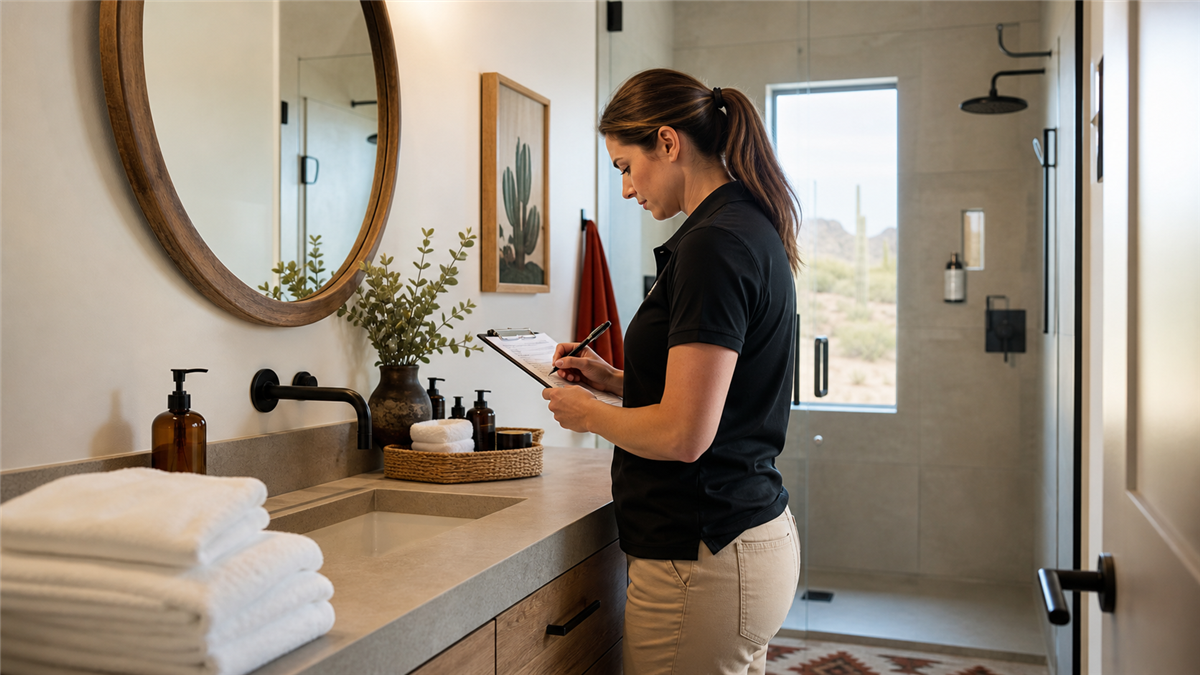
Managing the logistics of turnovers is one of the most challenging aspects of vacation rental operations. Guests often check out at 10:00 AM, and the next guests arrive at 3:00 PM. This five-hour window requires precise coordination, especially during peak seasons when properties have back-to-back bookings.
To manage this window successfully, property managers must implement structured scheduling systems. This involves using specialized property management software that automatically alerts cleaning crews when a booking is confirmed or when a guest checks out early. It also requires establishing backup systems, such as having a secondary cleaning team on standby in case of emergency delays.
Logistics also extend to supply chain management. Cleaning crews must have ready access to locked owner supply closets stocked with linens, towels, toiletries, and cleaning agents. Ensuring these supply areas are organized and well-stocked allows cleaning teams to work efficiently without wasting time waiting for supplies to be delivered, keeping the turnover schedule on track.
Operational Excellence as a Marketing and Valuation Driver
A property’s cleaning standards and operational systems are not just back-of-house activities; they are powerful marketing tools. In the digital marketplace, guest reviews are public and permanent. A vacation rental with a consistent history of five-star reviews for cleanliness commands higher nightly rates and maintains higher occupancy levels.
When a property has a high cleanliness rating, it can leverage this reputation to attract more bookings. Promoting these standards on listing platforms and social media channels helps build a strong brand presence. For instance, understanding how to promote a vacation rental on facebook allows managers to highlight guest testimonials praising the immaculate state of the property, share behind-the-scenes videos of their professional cleaning process, and build trust with prospective guests. This organic promotion drives direct bookings, reduces reliance on third-party listing fees, and increases the net operating income of the business.
When valuation experts look at a vacation rental, they analyze the stability of its revenue streams. A property with a strong brand, high ratings, and active direct booking channels is valued much higher than one that relies solely on price discounting to fill nights. Consistent cleanliness standards are the baseline upon which this brand equity is built.
Preparing the Property Operational History for Business Appraisals
When preparing a hospitality property for sale or valuation, owners must gather their operational history to show buyers that the business runs smoothly. This operational packet is just as important as the financial balance sheet.
The operational history package should include:
- Turnover SOPs and Checklists: Proof of standardized, repeatable cleaning and maintenance protocols.
- Cleaning Logs and Audit Trails: Time-stamped records showing when cleanings and inspections were completed.
- Maintenance Records: Documentation of preventative maintenance, appliance servicing, and repairs.
- Vendor Contracts: Active agreements with reliable cleaning agencies, laundry services, and landscaping crews.
- Guest Feedback Records: Cleanliness ratings and reviews exported from booking platforms.
Providing this documentation proves to buyers that they are purchasing a structured, self-sustaining business rather than an unorganized operation. By documenting systems, owners show that guest satisfaction and property maintenance are built into the business structure, securing a higher valuation at sale.
Sources
- Centers for Disease Control and Prevention (CDC). “Water, Sanitation, and Environmentally Related Hygiene (WASH).” CDC. https://www.cdc.gov/hygiene/index.html
- Hospitality Sales and Marketing Association International (HSMAI). “Hospitality Certifications.” HSMAI. https://hsmai.org/certification/